The 2026 retreat hosted seventy-five writers from ten states representing multiple specialties.
FRIDAY, APRIL 24:
1:30-2:30 Registration at Olbrich Botanical Gardens
2:00-2:15 Welcome Remarks
2:15-3:45 Breakout guided writing sessions (90 min)
- Breakout Session A: Letters to the Unreachable: Mastering Epistolary Form led by Shanda McManus, MD
- Breakout Session B: Skill building at the interface between verbal storytelling and writing led by Christine Seibert, MD and Elizabeth Fleming, MD
3:45-4:00 Break
4:00-4:45 Breakout guided writing sessions (45 min)
- Breakout Session C: Reading into it: The patient’s perspective led by Liana Meffert, MD
- Breakout Session D: Why Failure Stories Succeed led by Olivia Davies, MD
- Guided Garden Tour: Outdoor walking tour through Olbrich Botanical Gardens
Welcome social events
5-7pm
- Student social at Garver Feed Mill, light dinner provided (option to meet at Olbrich lobby at 5pm and walk over together)
6-8pm
- Faculty social at Lake City Books, book reading and signing with Dr. K. Jane Lee, light dinner provided
SATURDAY, APRIL 25:
8-8:30 Registration and breakfast at the Pyle Center
8:30-10:00 Breakout guided writing sessions (90 min)
- Breakout Session E (Room 325/326): Clinical Poetry: Illness as experience led by Scott Biggerstaff, MD
- Breakout Session F (Room 209): Bringing narrative medicine to post-graduate trainees with Matthew Dettmer, MD, MFA
- Individual Writing Consultation (Room 312): 30-minute time slots available with Caroline Hensley, PhD
- Quiet Lakeview Writing Space (Room 320): available for independent free writing
10:00-10:15 Coffee Break
10:15-11:00 Breakout guided writing sessions (45 min)
- Breakout Session G (Room 325/326): Narrative Care: craft exercises for centering those we care for in our writing led by Susan Hata, MD
- Breakout Session H (Room 209): Purpose and Place: Paths to self-exploration in hierarchical medical training and beyond led by Riley Dean, Megan Jasicki, Alex Nelson and Cassandra Sundaram
- Individual Writing Consultation (Room 312): 30-minute time slots available with Caroline Hensley, PhD
- Quiet Lakeview Writing Space (Room 320): available for independent free writing
11:15-12:30 Keynote Plenary: Dr. K. Jane Lee
12:30-1:30 Lunch provided
1:30-3:00 Breakout guided writing sessions (90 min)
- Breakout Session I (Room 325/326): From Bedside to Byline: Turning your story into writing that counts led by Ben Trappey, MD, Maren Olson, MD, MPH, MedEd, Anthony Williams, MD
- Breakout Session J (Room 209): Landmines and Lily Pads led by Melissa Perrin
- Individual Writing Consultation (Room 312): 30-minute time slots available with Caroline Hensley, PhD
- Quiet Lakeview Writing Space (Room 320): available for independent free writing
3:00-3:30 Coffee/snack break
3:30-4:30 Breakout publishing sessions
- Seminar on Publishing A (Room 325/326 or on Zoom), How to get published: A workshop for writers of short fiction, nonfiction, and poetry led by Dr. Scott-Conner
- Seminar on Publishing B (Room 209): From Bedside to Bookshelf: Crafting your narrative medicine book proposal led by Renée K. Nicholson, MFA
- Individual Writing Consultation (Room 312): 30-minute time slots available with Caroline Hensley, PhD
- Quiet Lakeview Writing Space (Room 320): available for independent free writing
4:30-7:00 Break
7:00-9:00 Story Slam at Great Dane Eastside, light dinner provided, cash bar
SUNDAY, APRIL 27:
8-8:30 Continental breakfast at Olbrich Botanical Gardens
8:30-10:30 Small Group Writing Workshops, bring a piece of up to 1500 words to share
10:30-10:45 Break
10:45-11:45 Guided writing in the Garden or writing time
11:45-12:00 Closing Remarks
12:00-1:00 Open mic reading, lunch provided
1:00 Adjourn
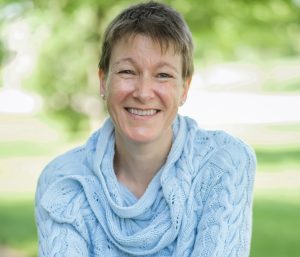
We are thrilled to announce that our 2026 plenary speaker will be physician author K. Jane Lee, MD.
Dr. Lee is a Professor of Pediatrics, and Bioethics and Medical Humanities, at the Medical College of Wisconsin, where she is the Interim Division Chief of Complex Care. She practiced pediatric critical care medicine for the first 15 years of her career, then transitioned into working with the Complex Care Program at Children’s Wisconsin.
Dr. Lee is the mother of two children, one of whom has severe neurologic impairment from a brain injury at birth. She is a passionate advocate for anti-ableism. Her book, Catastrophic Rupture: A Memoir of Healing, shows how the experience of parenting her daughter has transformed her perspective on disability and profoundly impacted her as a physician, mother, and person.
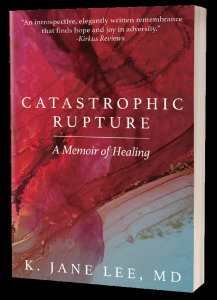
As a pediatric critical care physician and an ethicist, Jane Lee was accustomed to caring for children with a range of serious conditions and disabilities, and felt comfortable helping families navigate decision-making for these children. When a complicated delivery left her second child with a severe brain injury, she found that everything she had learned about disability and personhood as a physician and ethicist was no help as a parent.
This book allows the reader to walk alongside the author as she struggles to bond with and love her daughter, as she reconciles what is happening at home with her ongoing role as a physician to patients and families in similar circumstances, and as she shifts from the medical perspective of disability that sees an impaired body, to the mother’s perspective that sees the beauty and value in the person that is her child.
INDIVIDUAL WRITING CONSULTATIONS:
MPWR individual writing consultations can be tailored to the needs of your project. Whether you’re in the dreaming, brainstorming, outlining, drafting, or revising phase, Caroline will collaborate with you to help develop your work. In a 30-minute appointment, depending upon the goals and status of your piece, you can expect both rich discussion about your project’s message, audience, organization, and tone as well as careful review of any draft text you may supply before or during our meeting. Ranging from big picture idea formation to line-edits, Caroline offers a flexible consulting style designed to suit your aims. Come with what you have and as you are!
BREAKOUT SESSION OBJECTIVES:
Breakout Session A: Letters to the Unreachable: Mastering Epistolary Form led by Shanda McManus, MD
Learning objectives:
- Craft effective epistolary openings that establish intimacy and invite readers into one-sided conversations
- Sustain authentic voice across a complete letter while balancing vulnerability with narrative structure Apply specific techniques for using the “Dear ___” format to address unreachable audiences (deceased patients, former selves, systemic forces)
Identify and avoid common epistolary pitfalls including repetition, sentimentality, and losing narrative momentum - Distinguish when epistolary form serves the story better than traditional prose structure
Provide and receive craft-focused feedback on epistolary writing using workshop protocols - Revise their draft letter using concrete strategies for developing it into a publishable essay or linked series
Identify appropriate publication venues for epistolary work in literary and medical humanities journals
Breakout Session B: Skill building at the interface between verbal storytelling and writing led by Christine Seibert, MD and Elizabeth Fleming, MD
Learning objectives:
- Describe the science of storytelling and how telling and listening to stories impacts the brain
- Practice telling stories using present tense to promote rich sensory descriptions of scenes
- Explore basic story structure and get practice telling stories non-chronologically
- Practice first-person storytelling with stories that have defined your experiences in life/ medicine
Breakout Session C: Reading into it: The patient’s perspective led by Liana Meffert, MD
Learning objectives:
- Reflect on new insights gained from adopting the patient’s perspective
- Gain practice with describing a scene from multiple perspectives (first person, second person, third person)
Breakout Session D: Why Failure Stories Succeed led by Olivia Davies, MD
Learning objectives:
- Understand the key elements that make up a successful failure story.
- Craft a physical draft of a failure story to workshop in the future
- Have a collective sense of community, understanding and compassion for other attendees
Breakout Session E (Room 325/326): Clinical Poetry: Illness as experience led by Scott Biggerstaff, MD
Learning objectives:
- Explore tools to describe illness and the clinical encounter as something to be experienced
- Leave with a workable/revisable 1st draft poem
Breakout Session F (Room 209):
Bringing narrative medicine to post-graduate trainees with Matthew Dettmer, MD, MFA and Nicole Robinson, MFA
Learning objectives:
- Identify narrative medicine workshop elements previously described in literature pertaining to post- graduate trainees.
- Identify outcomes associated with NM activities among post-graduate trainees.
- Identify practical techniques for building and sustaining NM workshops among post-graduate trainees.
Breakout Session G (Room 325/326): Narrative Care: craft exercises for centering those we care for in our writing led by Susan Hata, MD
Learning objectives:
- Describe the pros and cons of centering the physician perspective in narrative medicine.
- Articulate craft skills for expanding narratives to center the patient or the physician-patient relationship and to de-center ourselves.
- Generate 3-4 variations on one scene, applying the craft skills presented in this workshop.
Breakout Session H (Room 209): Medical student guided writing session led by Riley Dean, Megan Jasicki, Alex Nelson and Cassandra Sundaram
Learning Objectives:
- Introduce concepts of hierarchy in medicine and historical background of medical training as apprenticeship
- Develop framework for naming both personal and professional challenges to self expression in medical training and in creative efforts
- Utilize framework to build strategy and confidence around confronting challenges to personal/professional identity in medical training
- Guided time for reflective and/or creative writing based on prompts offering approaches to overcoming challenges, creating with freedom, and developing confidence in expressing identity
- Structured time for small group discussion and reflection on medical training process, how this process helps and hinders a growth mindset and creative self-expression
Breakout Session I (Room 325/326): From Bedside to Byline: Turning your story into writing that counts led by Ben Trappey, MD, Maren Olson, MD, MPH, MedEd, Anthony Williams, MD
Learning objectives:
- Better understand the genre of personal narrative essays published in medical journals
- Gain comfort in crafting their own personal narratives
- Recognize tools for personal reflection and publication
- Be given time for reflection
Breakout Session J (Room 209): Landmines and Lily Pads led by Melissa Perrin
Learning objectives:
- Adapt parallel charting practices to their daily work life, lessening the potential for burn out and moral injury while deepening productive impact in work with patients and their families.
- Recognize story beats and personal insight as they use parallel charting with patient care as aspects of creative non-fiction, personal narrative and potential memoir material.
- Assess the material created in the workshop for further work and potential publication.
Seminar on Publishing A (Room 325/326 or on Zoom), How to get published: A workshop for writers of short fiction, nonfiction, and poetry led by Dr. Scott-Conner
Learning Objectives:
- Identify at least three potential venues for publishing their creative writing
- Discuss the difference between academic publishing and publishing creative writing
- Develop a submission strategy for their creative writing pieces and submissions
Seminar on Publishing B (Room 209): From Bedside to Bookshelf: Crafting your narrative medicine book proposal led by Renée K. Nicholson, MFA
Learning Objectives:
- Identify the essential components of a competitive book proposal for health humanities and narrative medicine projects
- Articulate their book project’s unique contribution, target audience, and scope in preparation for proposal development
- Describe the editorial review process at a university press like WVU Press and understand the timeline from submission to publication
- Develop a feasible action plan for completing their book proposal that accommodates their clinical and professional commitments